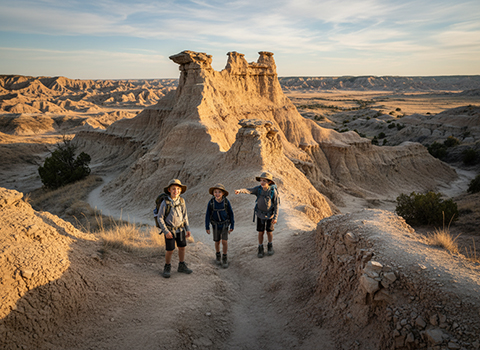
The Hiking Man Hikes South Dakota

The Urban Trail Hiker
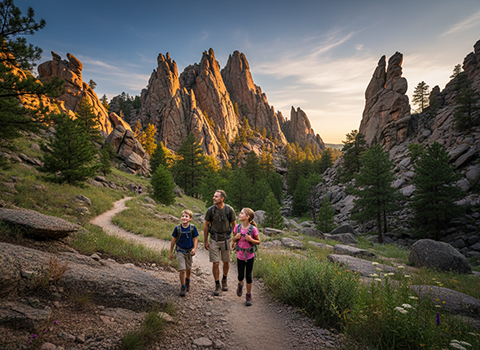
Hiking in South Dakota offers adventurers a chance to explore the state's diverse terrain, from the iconic granite peaks of the Black Hills to the expansive grasslands of the prairie. Whether traversing forested trails in the Black Hills or trekking across the expansive prairies of the Badlands, hiking in South Dakota promises unforgettable adventures amidst stunning natural beauty.

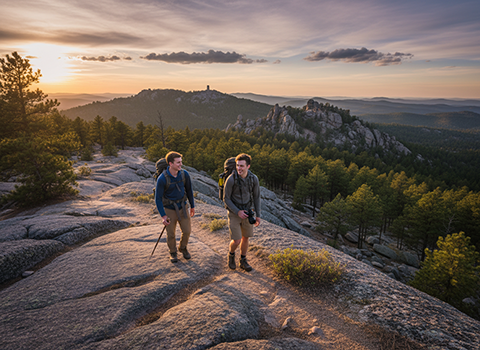
Black Elk Peak Trail

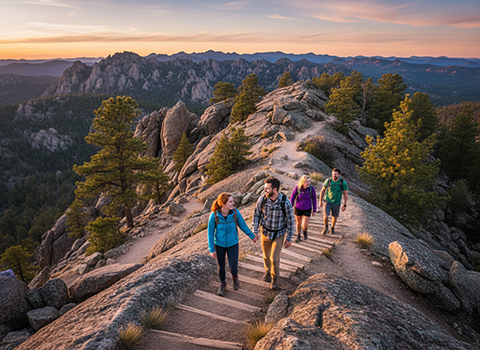
Hiking the Black Elk Peak Trail is one of the most iconic outdoor experiences in South Dakota, offering a rewarding journey through the heart of the Black Hills. As the highest point east of the Rocky Mountains at 7,242 feet, the trail draws hikers with its combination of natural beauty, cultural significance, and panoramic views. The most popular route begins at Sylvan Lake, where the path winds through ponderosa pine forests, open meadows, and clusters of massive granite spires that give the landscape a rugged, almost alpine feel. Well-maintained and clearly marked, the trail is accessible to a wide range of hikers while still feeling adventurous.
Black Elk Peak Trail

As you ascend, the scenery continually evolves. Wooden bridges cross quiet streams, stone staircases help navigate steeper sections, and occasional overlooks provide early glimpses of the vast Black Hills stretching to the horizon. Wildlife sightings are common, especially deer and mountain goats, and wildflowers brighten the trail during late spring and summer. The hike is moderately strenuous, with steady elevation gain rather than extreme climbs, making it a satisfying challenge rather than an exhausting one. Along the way, interpretive signs remind visitors of the area’s cultural importance to the Lakota people, adding depth and reflection to the physical journey.

Reaching the summit is a memorable moment. An old stone fire lookout crowns the peak, and from the top, hikers are rewarded with sweeping 360-degree views that, on a clear day, can extend for dozens of miles across forested hills and rocky outcrops. The sense of scale and quiet at the summit is striking, especially in the early morning or near sunset when crowds thin and the light softens the landscape. Whether you hike it for the views, the history, or the sense of accomplishment, the Black Elk Peak Trail stands out as a must-do hike in the American Midwest and a defining experience of the Black Hills.

Little Devil's Tower Trail

Hiking the Little Devil's Tower Trail in South Dakota is a short but exhilarating adventure tucked into the granite-studded landscapes of the Black Hills. Often accessed from the Sylvan Lake area or combined with nearby trails, this route offers a more rugged and adventurous feel than many of its neighbors. The trail begins gently, winding through pine forest and rocky terrain, but it quickly hints at the excitement ahead as massive stone formations rise above the treeline. Despite its relatively modest distance, the hike feels engaging and dynamic from the start.
Little Devil's Tower Trail

As the trail climbs, it becomes steeper and rockier, eventually transitioning into a hands-on scramble near the summit. This section is what makes Little Devil’s Tower especially memorable—hikers must use both hands and feet to navigate granite blocks and narrow passages. While not technical climbing, it requires careful footing and comfort with exposure, making it best suited for confident hikers rather than beginners. Along the way, breaks in the rocks provide dramatic views of the surrounding Black Hills, with Sylvan Lake and nearby peaks occasionally visible through the trees.

Reaching the top delivers a thrilling sense of accomplishment. The summit is small and rugged, but the views are expansive, offering sweeping perspectives of forested hills, jagged spires, and distant ridgelines. Because the trail is shorter and less famous than nearby Black Elk Peak, it often feels quieter and more adventurous, especially during off-peak hours. For hikers looking to add a touch of scrambling and excitement to their Black Hills itinerary, the Little Devil’s Tower Trail provides a compact yet unforgettable experience.

Sunday Gulch Trail

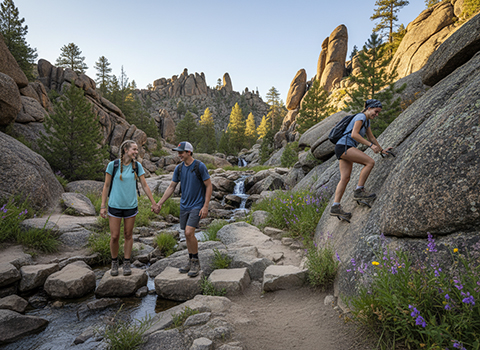
Hiking the Sunday Gulch Trail is one of the most adventurous and memorable experiences in South Dakota’s Black Hills. Located near Sylvan Lake in Black Hills National Forest, this trail immediately sets itself apart with dramatic granite walls, narrow passages, and the sound of rushing water echoing through the canyon. The route is typically hiked as part of a loop, often paired with the easier Centennial Trail, but the Sunday Gulch section is where the real excitement begins. From the start, hikers sense that this is not a casual stroll, but a hands-on journey through rugged terrain.
Sunday Gulch Trail

As the trail descends into the gulch, it becomes increasingly technical. Large boulders, slick rock surfaces, ladders, and metal handrails require careful movement and frequent use of hands for balance and support. The creek flowing through the canyon adds beauty but also increases the challenge, especially after rain when rocks can be slippery. This section is slow-going but deeply engaging, encouraging hikers to focus on each step while taking in the dramatic surroundings. The narrow canyon walls, shaded pools, and polished granite create a wild, almost labyrinth-like atmosphere that feels far removed from nearby parking areas.

Emerging from the gulch, the trail climbs steadily back toward Sylvan Lake, offering a strong sense of accomplishment after the scramble below. This upper section is less technical but still scenic, with forest views and occasional overlooks that highlight the contrast between the calm woods and the rugged canyon just traversed. Sunday Gulch Trail is best suited for adventurous hikers who enjoy scrambling and problem-solving on the trail rather than smooth tread. For those prepared for its challenges, it stands out as one of the most exciting and unique hikes in the Black Hills.

Black Hills Centennial Trail

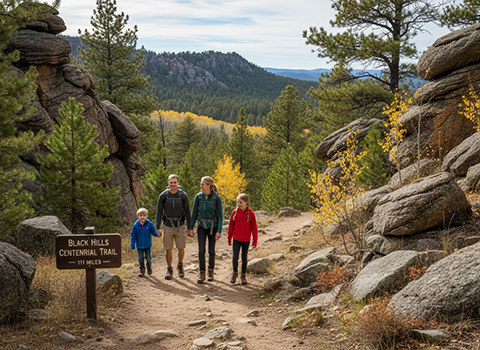
Hiking the Black Hills Centennial Trail is a journey through the full diversity of South Dakota’s Black Hills, stretching roughly 125 miles from Bear Butte in the north to Wind Cave National Park in the south. Designed as a long-distance trail, it can be tackled in short day hikes or multi-day backpacking segments, making it accessible to hikers of varying experience levels. The trail passes through remote forest, rolling prairie edges, granite formations, and high ridgelines, offering a constantly changing landscape that showcases the region’s natural character far beyond the most famous viewpoints.
 Black Hills Centennial Trail

Along the way, hikers experience a remarkable variety of terrain and ecosystems. Sections near places like Sylvan Lake and Black Elk Peak feature dramatic rock spires, pine forests, and sweeping overlooks, while other stretches wind through quieter meadows and open grasslands where solitude is more likely. Wildlife sightings are common, including deer, elk, and a wide range of birds, especially in less-traveled southern segments. The tread is generally well-marked and maintained, but distances between water sources and trailheads can be significant, rewarding those who plan carefully and enjoy self-sufficient hiking.

What truly sets the Black Hills Centennial Trail apart is its sense of immersion and continuity. Rather than a single destination, the trail offers a gradual unfolding of scenery, history, and landscape over miles of walking. Whether hiking a short scenic section or committing to a full thru-hike, travelers gain a deeper appreciation for the scale and quiet beauty of the Black Hills. For hikers who value long, contemplative journeys and varied terrain, the Centennial Trail stands as one of the Midwest’s premier long-distance hiking experiences.

Sylvan Lake Shore Trail

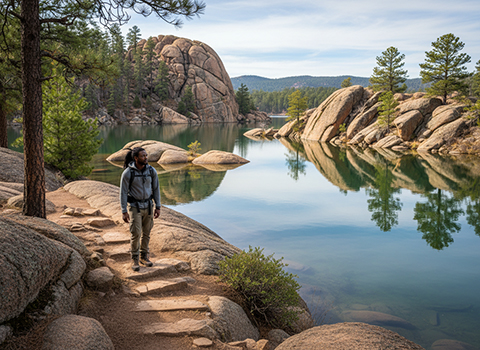
Hiking the Sylvan Lake Shore Trail is one of the most scenic and accessible walks in South Dakota’s Black Hills. Circling the clear waters of Sylvan Lake, this short loop offers constant views of dramatic granite spires rising straight from the shoreline, creating a landscape that feels both serene and striking. Located within Custer State Park, the trail is well maintained and relatively flat, making it popular with families, casual hikers, and photographers looking to experience the beauty of the Black Hills without a strenuous climb.
Sylvan Lake Shore Trail

As you follow the shoreline, the trail alternates between packed dirt paths, boardwalk sections, and stone steps that weave through boulders and clusters of pine trees. Each bend reveals a new perspective—reflections of rock formations in calm water, small coves tucked between cliffs, and open stretches where the lake widens beneath towering stone walls. In warmer months, kayakers and swimmers add life to the scene, while early mornings and evenings often bring quieter conditions and soft light that highlights the texture of the granite.

Though short, the Sylvan Lake Shore Trail delivers a rich experience that captures the essence of the Black Hills. It can be enjoyed on its own as a relaxing stroll or used as a gateway to longer hikes such as Black Elk Peak or Sunday Gulch. The combination of easy walking, dramatic scenery, and constant water views makes this trail especially memorable. For many visitors, it becomes a favorite stop—proof that even a brief hike can leave a lasting impression when the setting is this spectacular.

Cathedral Spires Trail

Hiking the Cathedral Spires Trail is one of the most visually dramatic and adventurous hikes in South Dakota’s Black Hills. Located near Sylvan Lake in Custer State Park, this relatively short trail leads hikers directly into a maze of towering granite needles that rise sharply from the forest floor. From the outset, the trail feels wild and rugged, weaving through ponderosa pine forest before quickly revealing the iconic spires that give the area its cathedral-like appearance. Despite its short distance, the hike delivers an outsized sense of exploration and discovery.
Cathedral Spires Trail

As the trail progresses, it becomes increasingly rocky and uneven, with sections that require careful footing and light scrambling over granite slabs. Narrow passages wind between massive stone pillars, creating a sense of scale that makes hikers feel small beneath the soaring rock formations. Climbers are often seen ascending the spires, adding to the sense of vertical drama, while hikers pause frequently to take photos or simply absorb the scenery. The terrain demands attention, but it is this hands-on, immersive quality that makes the Cathedral Spires Trail so memorable.

The end of the trail opens into a natural stone amphitheater surrounded by the tallest spires, offering a rewarding destination despite the hike’s modest length. Views here are close-up and intimate rather than wide and panoramic, emphasizing texture, height, and geological wonder. Many hikers choose to combine this trail with nearby routes such as Little Devil’s Tower or the Black Elk Peak area for a longer adventure. On its own, the Cathedral Spires Trail stands out as a must-hike for those seeking dramatic landscapes, light scrambling, and one of the most iconic rock settings in the Black Hills.

Notch Trail

Hiking the Notch Trail is one of the most exciting and iconic short hikes in South Dakota. Located in Badlands National Park, this trail packs a surprising amount of adventure into a relatively brief distance. The route begins by winding through narrow clay canyons and eroded rock formations, immediately immersing hikers in the dramatic textures and colors that define the Badlands. Though short, the trail feels bold and exposed, setting it apart from many easier walks in the park.
Notch Trail

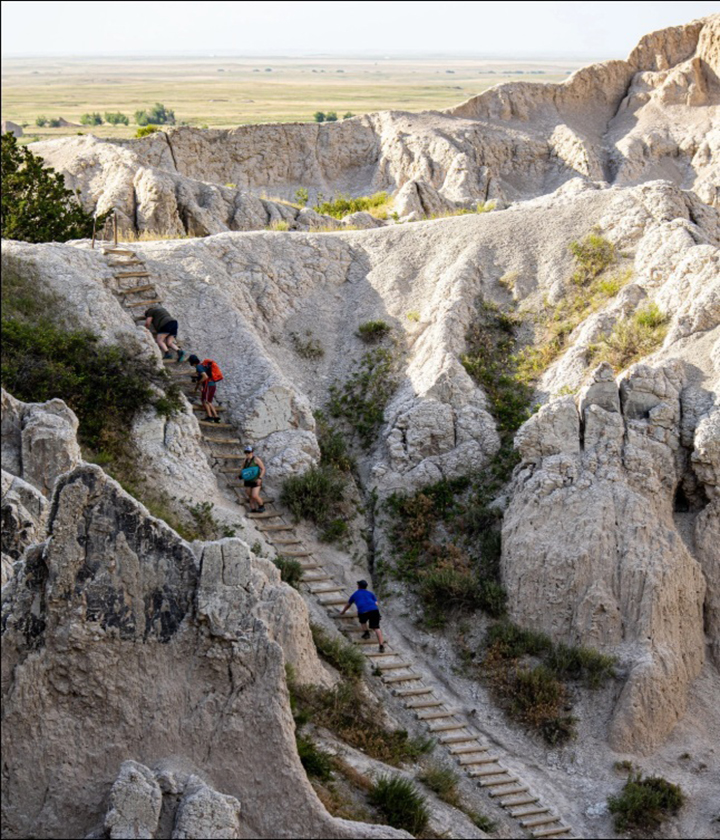
The defining feature of the Notch Trail is its steep wooden ladder, which hikers must climb to access the upper section. Ascending the ladder adds a moment of adrenaline and requires comfort with heights, especially as the trail becomes narrow and exposed along the cliff edge. Beyond the ladder, the path traverses a ledge carved into the canyon wall, offering sweeping views of the White River Valley and layered badlands formations stretching far into the distance. The footing here demands care, particularly in windy conditions or after rain, but the scenery is more than worth the effort.

At the end of the trail, hikers reach the “notch” itself—a dramatic overlook framed by rugged rock walls and open sky. The sense of openness contrasts sharply with the enclosed canyons below, highlighting the park’s extreme geological variation. Because of its exposure and ladder climb, the Notch Trail is best suited for confident hikers rather than those with a strong fear of heights. For visitors seeking a short hike with big views and a true sense of adventure, the Notch Trail delivers one of the most memorable experiences in Badlands National Park.

Roughlock Falls & Spearfish Falls Loop

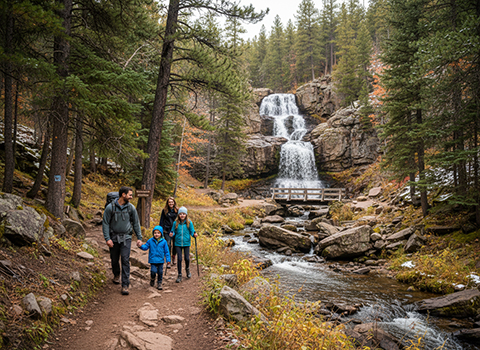
Hiking the Roughlock Falls Trail in South Dakota offers a peaceful and scenic experience tucked within Spearfish Canyon, one of the Black Hills’ most picturesque corridors. The trail follows Little Spearfish Creek through dense spruce and aspen forest, with boardwalks and well-maintained paths making it accessible for most hikers. At just over a mile round trip, it’s a short hike, but one rich in natural beauty, especially as the sound of cascading water grows louder near the falls.
Roughlock Falls trail

Roughlock Falls itself is a wide, fan-shaped waterfall that flows gently over limestone ledges, creating a series of pools and moss-covered rock shelves. In warmer months, wildflowers line the trail and sunlight filters softly through the canyon walls, while autumn brings brilliant yellows and golds to the surrounding aspens. Winter transforms the hike into something entirely different—ice formations build dramatically along the falls, making it one of the most popular cold-weather hikes in the Black Hills and a favorite destination for photographers.

What makes the Roughlock Falls Trail especially appealing is its versatility. It’s ideal for families, casual walkers, and seasoned hikers looking for a quiet, restorative outing between more strenuous Black Hills adventures. Benches and viewing platforms near the falls encourage lingering, while nearby trail connections allow you to extend your hike deeper into Spearfish Canyon if desired. Whether visited as a quick stop or a relaxed nature walk, the Roughlock Falls Trail delivers classic Black Hills scenery in a calm, easily enjoyed setting.

Devil's Bathtub Trail

Hiking the Devil's Bathtub Trail is a short but rewarding adventure tucked into the lush northern Black Hills. Located near Spearfish Canyon, this trail leads hikers through dense forest and along a lively stream toward a uniquely sculpted natural pool carved into the rock by rushing water. The hike is relatively brief and family-friendly, making it a popular stop for visitors looking to experience waterfalls and dramatic geology without committing to a long trek. From the trailhead, the sound of flowing water sets the tone for a cool, refreshing hike.
Devil's Bathtub Trail

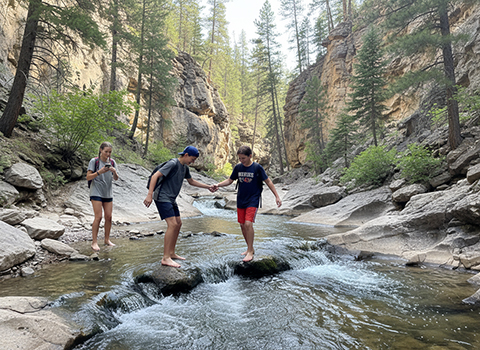
As the trail follows the creek upstream, hikers cross wooden bridges and pass mossy rocks, shaded banks, and small cascades that feel distinctly different from the drier southern Black Hills. The route is mostly gentle, though rocks near the water can be slick, especially after rain. The highlight comes at the end of the trail, where the creek pours into a smooth, circular basin—the “bathtub”—before spilling onward. The constant motion of water and the polished stone walls make this spot especially striking, and it’s a favorite place to pause, explore, and take photos.

The Devil’s Bathtub itself is the perfect payoff for the hike, offering a quiet, shaded setting that feels hidden and intimate. On warm days, the cool air and mist near the pool provide welcome relief, though entering the water is not advised due to strong currents and cold temperatures. While short in distance, the trail delivers a classic Black Hills experience: flowing water, forest shade, and a memorable natural feature. For hikers exploring Spearfish Canyon or looking for a scenic stop with minimal effort, the Devil’s Bathtub Trail is a small gem well worth the visit.

Badlands Castle Trail

Hiking the Castle Trail is a classic Badlands experience that immerses hikers in the park’s vast, otherworldly landscape. As the longest trail in Badlands National Park, the Castle Trail stretches for several miles across open terrain shaped by erosion into sharp ridges, layered cliffs, and pale clay formations. The hike can be done as an out-and-back or combined with the Fossil Exhibit Trail for added interest. From the start, the sense of openness is striking, with expansive views that emphasize the scale and isolation of the Badlands.
Badlands Castle Trail

The trail itself is mostly flat and well-marked, but the lack of shade and constant exposure to sun and wind make it more demanding than the elevation profile suggests. As hikers move deeper into the Badlands, the scenery subtly shifts—colors change with the light, and distant formations slowly reveal new shapes and textures. It’s common to see prairie dogs, bighorn sheep, or soaring raptors along the route, adding life to the stark environment. Because the terrain is fragile and easily damaged, staying on the marked path is essential to protect the landscape.

What makes the Castle Trail especially memorable is its quiet, contemplative nature. Unlike shorter, more dramatic hikes with ladders or scrambles, this trail rewards patience and observation, allowing hikers to absorb the Badlands at a slower pace. The silence, broken only by wind and wildlife, creates a powerful sense of remoteness. For those seeking a longer walk that showcases the raw geology and wide-open beauty of Badlands National Park, the Castle Trail offers one of the most immersive hiking experiences in South Dakota.